Protect Yourself from Aggressive Stinging Wasps

While the distinct buzzing noise and mere sight of hornets or wasps are enough to make most people swat wildly (or run) in fear, there are much safer ways to deal with these sometimes aggressive summer pests. We advise our home and business owners that when it comes to stinging insects, gaining a better understanding of these pests’ behavior and habits is an important part of helping to prevent stings.

In fact, stinging insects can pack more than just a painful sting. According to the National Pest Management Association (NPMA), a nonprofit organization committed to the protection of public health, food and property from common household pests, stinging insects send more than 500,000 people to the emergency room every year.

The best way to ensure you or someone in your family doesn’t become a victim of painful stings is to understand which species are causing problems on your property and how best to avoid them. However, hives and nests should never be handled or removed on your own as some colonies can contain hundreds of insects and can sting en masse in defense of the nest.

Here are some tips for the three most common aggressive flying stinging insects:

Bald-Faced Hornets
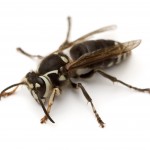
Bald Faced Hornet - Johnson Pest ControlBald-faced hornets get their common name because they are largely black in color, with a mostly white face. These social insects live in colonies that can contain between 100 and 400 members at their peak. They build nests that are at least three feet off the ground and in exposed locations such as trees, utility poles, overhangs, houses, sheds or other structures. Unlike many other stinging insects, bald-faced hornets do not reuse their nests season after season.

Prevention: Bald-faced hornets are aggressive and will attack if their space is invaded. During the summer months, walk around the exterior of your home to inspect for nests on a routine basis, paying special attention to overhangs, eaves, the underside of porches and decks.

Yellowjackets
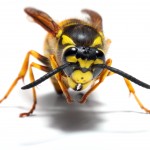
Yellow Jacket Hornet - Johnson Pest ControlThese social insects tend to build nests in trees and buildings, as well as in the ground. They are slow to sting unless their nest is threatened, in which case they will become highly aggressive. Unlike bees, yellow jackets can sting several times and inflict severe pain.

Prevention: Yellowjackets are especially attracted to sweets and proteins, so it is important to cover food and drinks during outdoor events and promptly clean up and dispose of food and garbage in a sealed trash container.

Paper Wasps
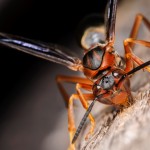
Red Paper Wasp Hornet - Johnson Pest ControlPaper wasps get their common name from the paper-like material they use to build their nests. Their nests are typically made in the shape of an umbrella. These pests build nests on twigs and in tree branches and shrubs, as well as porch ceilings, eaves and similar covered places. Wasps are capable of stinging more than once and may use alarm pheromones to call for back-up in defending their nest.

Prevention: Check for paper wasp nests before performing yard work such as shrub or hedge trimming. Treat wood fences and deck railings with a repellant oil to deter paper wasps from gathering cellulose for nest creation.

Because of the aggressive nature of these stinging insects, it important to contact a pest professional to remove nests on your home or property.
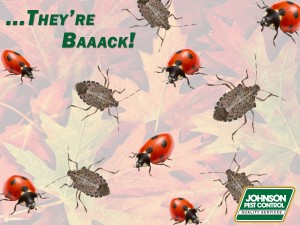

Get Rid of Lady Bugs & Stink Bugs This Fall

Ladybug & stink bug treatement

You may start to notice ladybugs and or stinkbugs beginning to take over your home with the coming cooler weather. Ladybugs and stink bugs are triggered by the drop in weather temperature to go into their hibernating for winter mode and can enter homes through any small opening, mostly around windows. Late in the season, adults will enter homes and other buildings when seeking sheltered sites to overwinter. If the temperatures drop somewhere below the 60-degree mark then be on the lookout for the bugs to start to invade your home. You can prevent this with our fall lady bug and stink bug preventative service.

Call us at 865-453-7587 or submit the form on the right to schedule your preventative ladybug and stink bug service. Mention the coupon to receive $25 off.

ladybug coupon


5 Fall Home Pest Control Tips

Home Pest ControlPest control around the home is a year-round effort, but it doesn’t have to be an exhaustive effort. Here are five tips to prep for your own home pest control this fall.
5 Home Pest Control Tips

  1. Reduce Moisture and Water Around The House: Coming off the summer months you might think that we are done with mosquitoes. That is far from the case. Mosquitoes will continue for a few months. Go around the house and disperse any standing water where mosquitoes could breed. Moisture build up areas around the house are perfect environments for termites and many other pests. If you have areas of the house that are building up moisture then do what you can to dry them out. Some areas may only need some landscaping, shrubs, tree limbs, etc. cut back to give some ventilation and sunlight to dry out. If your crawl space is damp then place a fan or two around the crawl that can be turned on periodically to help ventilation. Open vents around the crawl space, but insert screens at the same time to keep out critters.
  2. Fix All House Integrity Compromises: Every day it seems we visit at least one house that has some vegetation or structural issue that is compromising the house. Walk around the house and look for trees that might be pressing into the eaves, shrubs that are covering over the house vents, leaking pipes, falling screens, or any other noticeable issues. Critters and bugs utilize these types of compromises of the house structure to make their way in for shelter for the fall and winter months. Once these pests get into your house they are difficult (and costly) to get out. Some compromises to your house can even lead to structural issues that go beyond pests and can cause thousands in repairs.
  3. Seal Cracks: This is that time of the year when we will start to notice ladybugs, Asian ladybugs, stink bugs, kudzu bugs, boxelder bugs and other pests showing up in mass around our windows and doors inside the house. They are just looking for a warmer place to call home for the late fall and winter. They will not be causing any harm to your family or destruction to your house, but they can be impossible to get rid of once they are in the house. Especially if you noticed these bugs in your house last year, seal up those windows or doors where they occupied last year first. Creating a nice seal around your house will also help keep some of your heating costs down over the winter, which is a good add on to sealing up the house.
  4. Clean Out the Cobwebs: If you go into your garage or look around the windows of the exterior of your house you will likely find cobwebs all over. Cobwebs generally indicate spiders (bit of sarcasm there) so do not be alarmed. Not all spiders are harmful to us humans, most are not. Some spiders are actually quite helpful to the ecosystem. But not many of us are raving fans of spiders. So we want them out of the house as well. Take a day or so to go through those areas that spiders have staked a little claim of your home and clean them out. If you are paying attention to the first three tips in this list then it is likely the spiders will not come back to those spots because they only want to go places that have options to feed.
  5. Put Down a Perimeter: If you have done all the prior pest control tactics then you are likely ready to put down a little bit of some chemical pest treatments around the house. Our suggestion would be to call on a pest professional at this point. Often when you consider your time, the chemical itself, a spray container, and any other random expenses you might need to get ready to spray on your own, the cost for hiring a professional is cheaper or relatively close to the same price. It doesn’t do you very much good to do this step before the others because creating a perimeter that can be stepped over by climbing trees next to the house or jumping from bushes only makes the perimeter 50% effective at best. Once you have an effective perimeter in place you will find that pests are kept out of the house more efficiently and if they do make it into the house they do not get very far without dying.

West Nile Virus in Knoxville

We’ve reported on the West Nile Virus a number of times. We have highlighted when West Nile Virus was first reported in Tennessee. In the latest mosquito and West Nile Virus news the Knox County Health Department announced that is going to be spraying for mosquitoes in the West Hills and West Kingston Pike areas.
They will be spraying from 9pm to midnight. This is after mosquitoes would complete one of their most active period of feeding and laying eggs (dusk). The other active period is dawn.

From WBIR:

(WBIR – KNOXVILLE) A second round of spraying for mosquitoes will take place, weather permitting, 9 p.m. to midnight Thursday in the Tower Drive area of North Knoxville.

The Knox County Health Department conducted an initial round of spraying Aug. 30 in the area.

Also, the West Hills and West Kingston Pike areas are scheduled for follow-up spraying 9 pm. to midnight Sept. 17.

The Health Department is asking residents in those areas to avoid going outside and keep pets indoors during spraying.

The Health Department only sprays when mosquitoes test positive in an area for the West Nile virus, which has been reported in several humans in Tennessee including Blount County.

West Nile can cause illness in humans, including fever.

Less than 1 percent of infected people develop a serious, sometimes fatal neurologic illness, according to the Centers for Disease Control and Prevention.

If you are in areas that are heavily populated with mosquitoes then it is a good idea to protect yourself and your family. Put on some longer sleeved clothing and pants, put on mosquito repellent with DEET. Go through some of the preventative measures around your home to keep mosquitoes away. You can even suggest similar prevention measures to your work facility teams.

If you find yourself displaying symptoms of West Nile Virus seek medical assistance immediately.

UPDATE from WBIR:

The new areas are at and around Milligan Street in East Knoxville and the East Emory Road area of North Knox County. Spraying will be 9 p.m. to midnight there, weather permitting.

The Health Department reminds residents to stay inside and keep their pets inside while spraying is going on.

Signs will be posted in affected areas to alert residents.

Mousetraps of a Different Time

Ever wonder how people did pest control way back in the day? Specifically how they got rid of rats and mice? Well mozy on up the road to Norris to check out a pretty robust collection of turn of the century and centuries old mousetraps.

From our friends at WBIR

You may think of Norris Dam State park as a beautiful place to enjoy the outdoors. It also features an indoor attraction: the Lenoir Museum.

All the things at the Lenoir Museum in Norris were collected over about 60 years by Will G. and Helen Lenoir.

“That was there hobby. That’s what they did,” Michael Mlejodaj explained.

He said they donated it to the state to build the museum, which now includes more than 5,000 interesting artifacts. Some of them are mousetraps.

“There’s quite a variety of different ways to get rid of rodents,” he said.

Some are more gentle than others.

“This is a humane trap. This doesn’t kill them. You can let them out the next day,” he said.

Then there’s the Orchard Mouse Destroyer.

He demonstrate, “You would put some water and some kind of poison in there and then the rat or the mouse would just go in there and take a little drink and fall into the water.”

And meet its demise.

You can see the mousetrap collection and much more at the Lenoir Museum in Norris.

Managing House Pests

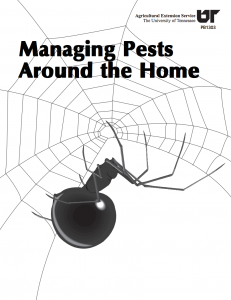
Managing House Pests - House Bugs Managing those house pests, or house bugs, does not have to be a losing battle. You can win at killing off and significantly decreasing your interactions with spiders, scorpions, ticks, bedbugs, ants, bees, and wasps.

Since you are not likely to visit the University of Tennessee’s agriculture website on a regular basis we thought we’d bring some of their great information to you. Here is a download of their “Managing Pests Around the Home” PDF which has a great amount of information.

What are household pests?

Most household pests are insects and are commonly called “bugs.” Other organisms such as spiders, scorpions, centipedes, millipedes, ticks, sowbugs, pillbugs, mites, rats, mice, snakes, bats, squirrels, birds, molds and fungi may enter homes. In Tennessee, one or more of about 40 common pests are found in every home at one time or another. Even the most conscientious person cannot always avoid an occasional pest infestation.

Where are these pests found?

Under optimal conditions, large populations of an insect, rodent or other pest can occur in your yard, home, farm or neighborhood. Large numbers of a pest species can develop in trees, stumps, flower beds, mulch, leaf litter, garbage, wood piles, ditch banks, animal carcasses, stored products, spilled materials, sewer lines and other sites.

Pests enter homes through openings in the walls, floors, around pipes or cracks, under doors or windows. Pests seeking shelter build nests or hibernate within the walls,
attic or in living quarters.

What attracts them to your home?

Pests are attracted by light, warm air, moisture and food. Odors from a dead bird, rodent, dead insects or nest in a wall, soured mop or spilled materials can also be attractive. They seek protection and shelter in dark cavities in walls or crawl spaces.

What can I do to prevent pest problems in my home?

Luckily, many pests are easily controlled. This publication will explain how to manage the most common household pests found in Tennessee. We have placedspecial importance on controlling pests by limiting their access to food, water and shelter. Control devices such as vacuums and traps are emphasized. Pesticides are used in a manner to reduce exposure to you, your property and the environment. Always read the entire pesticide label for directions on mixing, applying, safety precautions, storing and disposing of the product before using it. If you are unsure about how to control a household pest after reading this publication, ask your county Extension agent for additional assistance.

Some pests, such as termites, require the use of special equipment and knowledge to apply large volumes of insecticides to all possible entry points into the structure. Professionals have the proper equipment and the training, including safety training, to apply the large volumes of pesticides needed to rid your home of termites. Termites can also be managed with baits, but professional training in understanding the biology of the termite is essential to obtain control.

Quite often, professional pest control technicians have access to more effective active ingredients and formulations than the homeowner. The professional is trained in the life cycle, habits and preferences of the pest, as well as the safest and best techniques to control them. In Tennessee, pest control technicians are required to pass a test before they can apply pesticides in your home. (They may work 90 days under the direct supervision of a licensed operator before taking the test.) Technicians should carry a commercial pesticide applicator certification card verifying they are approved by the Tennessee Department of Agriculture. They need to attend training sessions to obtain points to keep that card. If they do not get enough points within three years, they have to take another test. Also, they must work for a licensed operator if they are charging you a fee. The charter number of their employer’s business must appear on their truck.

When should you ask for professional help?

Of course that is a decision you as a homeowner must make for yourself. You may want to use a professional:

  1. When treating for termites because special equipment and training are needed
  2. When treating for other wood-destroying insects and organisms (especially if you are concerned about reselling the home)
  3. If the pest is found in difficult-to-reach locations and requires treatment with special equipment
  4. If you are concerned about pesticide exposure during mixing and applying
  5. If there is not enough time to do it yourself
  6. If several attempts have failed to control the pest.
  7. Professionals need your help to manage pests too. Please perform all the sanitation and exclusion practices they recommend

Ticks Post Risks Even as Summer Closes Out

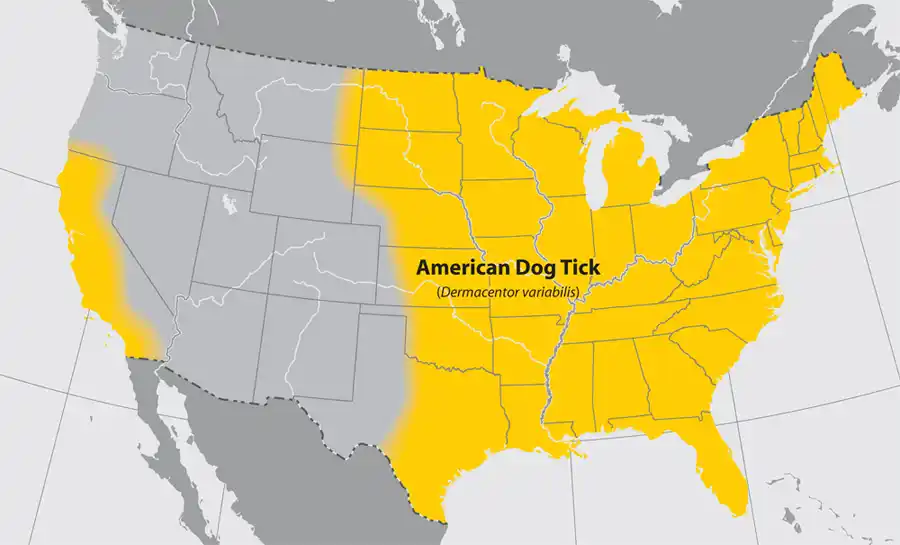
Map of the united states with states highlighted to show american dog tick habitat - keep ticks away from your home with Johnson Pest Control in TN

As the long days of summer stretch into August, many people across Tennessee will take advantage of the last few weeks of warm weather by spending an increased amount of time enjoying Mother Nature. However, more time outside can sometimes increase the risk of coming into contact with ticks and tick-borne diseases. We want to remind our friends to make tick prevention a top priority before heading outdoors.

Tick-borne diseases, especially Lyme Disease, are a major health threat during the late summer and early fall months. As ticks are most often found in wooded areas and are especially fond of high grass and low-growing vegetation along the edge of trails, we advise everyone to stay on the trails and wear tick repellent and long pants when venturing outdoors. Homeowners should also take steps to make their property inhospitable to ticks by keeping lawns cut low and cutting down weed grasses that may occupy some part of your property.

Dog ticks are the most commonly found tick species in East Tennessee. These ticks are capable of transmitting a bacteria that can cause Rocky Mountain Spotted Fever, which can be fatal. The Blacklegged Tick, aka the Deer Tick, can also be found in East Tennessee and that is the primary culprit behind the spread of Lyme Disease.

The National Pest Management Association (NPMA) offers the following tips for preventing tick bites on your property and while spending time outdoors:

  • Wear a bug spray containing at least 20 percent DEET when outdoors, and reapply as directed on the label.
  • Wear long pants, long-sleeved shirts and closed-toe shoes when outdoors, especially in wooded areas or tall grasses. Light-colored clothing will make it easier to spot ticks and other insects.
  • When hiking, stay in the center of trails, away from vegetation.
  • Take steps to keep your own yard tick-free. Keep grass cut low and remove weeds, woodpiles and debris, which can attract ticks and other pests.
  • Inspect your pets regularly for ticks, as pets are susceptible to tick-borne illnesses and health-related issues. Consider applying a monthly treatment to help protect your pets from ticks.
  • Inspect yourself and your family members carefully for ticks after being outdoors.
  • If you suspect you have a tick problem, contact a licensed pest professional who can inspect and recommend a course of action to reduce or eliminate ticks on your property.

If you get a tick bite be sure to check with your health care provider and monitor your body for symptoms. Symptoms can vary in severity and can often be misdiagnosed if doctors do not know to consider a tick bite as a contributing factor.

Mosquito Killer: Johnson Pest Control

It’s that time of year again in Knoxville, TN. The weather is warm, the rain is plentiful, and the mosquitoes are as pesky and bothersome as ever. If you and your family plan to enjoy the great outdoors, you need more than just basic pest control: You need a mosquito killer.

It sounds harsh, but facts are facts. Not only are mosquitoes itchy and irritating, but they are also carriers of dangerous diseases like West Nile virus. Because of this, they need to be prevented around your home to keep your family comfortable and safe during the warmer months.

Here at Johnson Pest Control in Knoxville, TN, we specialize in the mosquito treatment you need. Our service technicians are passionate about keeping your family healthy and happy by using a specific set of practices to keep mosquitoes away from your home. Here’s what to expect:

Inspection

The technicians at Johnson Pest Control will likely begin by inspecting the outside of your home. They look for areas that would be particularly attractive to mosquitoes: primarily any type of water on your property. After the inspection, they will likely make recommendations for these problem areas to be cleaned up or removed.

Treating Breeding Sites

Mosquitoes love to breed in standing water. Birdbaths and clogged gutters can be hot spots for mosquito families, especially larvae. When Johnson Pest Control comes to your Knoxville, TN home, you can rest assured that these wet breeding sites will be treated with mosquito killer made to control larvae for an extended time. The last thing you want is a new generation of mosquitoes on your property ready to feast on your family, and we won’t let that happen.

Treating Daytime Hangouts

During the sunny days of summer in Knoxville, TN, mosquitoes gather in the shady spots of your yard. Bushes, trees, and parts of your house that are shielded from the sun can become popular daytime hangouts for the mature, biting mosquitoes that pester you and your family. The technicians at Johnson Pest Control know this, and will treat those areas with mosquito killer to keep the peskiest pests of summer from sticking around your yard.

Repeat

The mosquito management programs at Johnson Pest Control include a monthly return to your Knoxville home. Each month, the mosquito control technicians will treat and inspect your space again to keep mosquitoes and their breeding areas off of your property.

Johnson Pest Control specializes in mosquito control, as well as many other pest control services for your home. Contact us to see how we can help you today!

What Are Some Bed Bug Signs?

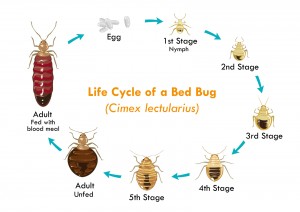
Bed Bug Pictures - Life Cycle of a Bed Bug
The bed bug life cycle is constant and you might see all stages of bed bugs in your home. The smaller nymph stages can be hard to notice unless specifically inspecting for bed bugs.

Bed bugs are a serious pest problem these days. But what are the bed bug signs to let you know that you might have a bedbug problem?

1. You See A Bed Bug: If you see a bed bug then it is likely that there are more than just that one bug. So you will want to take action to contact an experienced bed bug removal pest control company. Bed bugs have a life cycle as do all bugs, so you might notice the smaller bed bug nymphs. You can always test your suspicions by placing some bed bug monitors around your bed.

2. Bites At Night: Bedbugs bites often only cause harm when a person is allergic to them, however, you may still be able to notice some welts. If you notice consistent, pimple sized, bumps on your skin then maybe you have something to be concerned about.

3. Blood Spots on the Sheets: If you are keeping up your house then you wash your bedroom sheets with some regularity. Should you start to see little blood spots on the sheets then there is a probability that you have a bed bug infestation. At that point, you will want to go and check out the mattress to see if it has blood spots and if bed bugs are hiding in the creases.

4. Feces: Bed bugs are like any other creature and leave behind their own trails of fecal matter. It is hard to say that you would not see the blood spots but find fecal matter from the bed bugs, but it is possible. The fecal matter spots are no bigger than the tip of a ballpoint pen. So the can be easily missed. There is a stench that is created when a bed bug infestation gets out of control.

5. Eggs: Again, if you are not seeing the blood spots or fecal matter first then you might not be seeing the eggs and nymphs. The eggs are small, 1mm in size, and a yellowish/clear colored. Bed bugs can lay 1 to 3 eggs per day, so if you are seeing eggs then you need to get help immediately.

Worst case infestations it will become really clear you have a bed bug problem. Bed bugs will start to be visible more than just at night. You might notice them looking for food (your blood) during the daytime. They could start to spill out from their hiding places and show up on the walls, side tables, curtains, etc.

Bed bugs are a resilient bug and not susceptible to over the consumer based chemical treatments. It is in your best interest to contact a professionally trained and experienced pest control company to help get rid of your bed bug problem.


Prevent Pests From Ruining Your Outdoor BBQ

A family barbeque outside in the summer - keep pests away from your home with Johnson Pest Control in TNSome of the best memories are made while spending time with family and friends at an outdoor bbq and celebrations. However, an invasion of pesky pests such as mosquitoes, ants, flies and stinging insects can quickly put a damper on outdoor activities. We like to remind our homeowners to take steps before and during outdoor events to prevent pests from ruining the fun.

Not only are pests an immense nuisance when you’re trying to relax and enjoy a day outdoors, but some also pose health threats to you and your guests, making prevention even more important

Ants and house flies can contaminate food while stinging insects send more than 500,000 people to the emergency room each year. Mosquitoes are carriers of the potentially fatal West Nile virus, as well as other illnesses that are becoming more prevalent across the U.S., such as the Chikungunya virus. Not good stuff

The National Pest Management Association (NPMA), a nonprofit organization committed to the protection of public health, food and property from common household pests, offers the following tips for preventing pests at summer picnics, barbecues and other outdoor events:

  • Before the party, check all window screens and screen doors and repair any holes. As guests come in and out of your house, make sure the doors close behind them.
  • Remove or drain any sources of standing water in your yard that could serve as a breeding ground for mosquitoes, including birdbaths and garden ponds.
  • The majority of mosquito species are most active at dusk and dawn, so if you are planning an event before sunset, make sure there is plenty of insect repellant on hand containing an EPA-registered active ingredient like DEET or Picaridin. Placing citronella candles on decks and patios can also help to minimize the presence of mosquitoes during an event.
  • Stinging insects, especially yellow jackets, are attracted to sugars and proteins. Provide clear plastic cups for your guests, as aluminum cans and plastic bottles, are convenient hiding places for stinging insects.
  • Keep all food and beverages in sealed coolers and containers to avoid contamination from ants and flies, and keep garbage cans sealed and away from guests.
  • Immediately clean up any spills or crumbs from tables and other surfaces, and bring utensils and dishware indoors shortly after the meal.
  • You can even get creative with your grilling.

Taking these simple steps can make all the difference in preventing unwanted guests from crashing your summertime event.