Questions You’ve Never Thought to Ask About Roaches

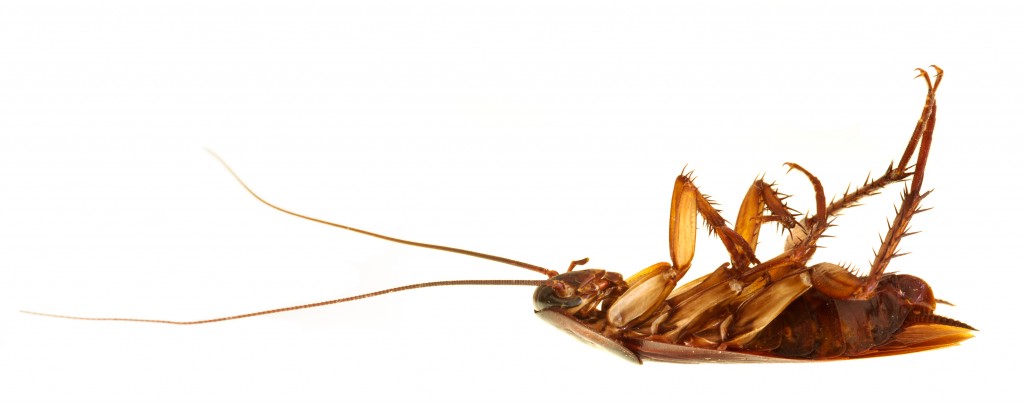
Dead Roach - Johnson Pest ControlIn most scenarios when we find roaches, we don’t ask why they die on their backs or what they do when they die in the outdoors. We are just glad they are dead and ask “are there more?”
Marla Broadfoot of The Charlotte Observer asks entomology professor Coby Schal some of these questions about roaches that you’ve never thought to ask, but if you read up on them they are quite fascinating to think about.

Q. Why is it that most of the time when we come across a dead cockroach, it is on its back with its legs in the air?

A. There are two basic reasons. Cockroaches have a slightly rounded and greasy back, and a flat body that helps them squeeze and hide in narrow cracks and crevices. Their long legs give them a high center of gravity, meaning they carry most of their weight around their backs. When a cockroach is dying of old age, its high center of gravity pulls its back toward the floor, and its rounded back and weakened muscles prevent it from righting itself, particularly on smooth surfaces.

The insecticides we use to kill roaches can have the same effect. Most of these insecticides are neurotoxins – poisons that can trigger tremors and muscle spasms, eventually causing the cockroach to flip on its back. A healthy cockroach can easily right itself, but the tremors, lack of muscle coordination and, again, the rounded back and high center of gravity cause the intoxicated cockroach to get stuck that way.

Q. We humans usually have no trouble righting ourselves after lying down. But then again, we can’t climb up walls. How are roaches wired differently than humans to affect how they move?

A. Because we have two legs and cockroaches have three pairs of legs, the equivalent action for us would be going from lying to standing. We also have a high center of gravity, and righting or standing becomes more challenging as we age.

Despite this similarity, there are many striking differences that affect mobility. In the cockroach, the brain doesn’t coordinate everything. Instead, each pair of legs is controlled by its own bundle of nerves. So, a headless cockroach can still move around and try to right itself. Most cockroach species also have two sharp claws on each foot similar to a tree climber’s spurs, and a suction cup-like pad between the claws that enables them to walk upside-down even on smooth glass.

Q. We often witness the deaths of these pests in our homes, but how do roaches typically die in the wild?

A. Most people are not aware that about 5,000 cockroach species have been described and named worldwide, and there are just as many yet to be named. Only about half a dozen are household pests, but often outdoors cockroaches inadvertently enter the home and cannot find their way back out. The most important household pest, the German cockroach, has adapted so well to living in our homes that we don’t know of any wild populations of this species.

Cockroaches that live outdoors rarely die of old age because predators and parasites are rampant in the wild. For example, more than 50 percent of the diet of the red-cockaded woodpecker consists of wood cockroaches. Cockroaches are often the dominant prey in the stomach contents of lizards, geckos, birds, spiders and scorpions – some kinds of cockroaches actually “swim” through the desert sand and serve as an important food for the desert fauna.

marla.broadfoot@gmail.com

If you are seeing a number of roaches around your home or business, but they are not actually dead, then give us a call at Johnson Pest Control. We would be glad to handle those roaches so that they are no longer a living problem.
Tennessee Poison Center Offers Tips for Preventing and Treating Black Widow and Brown Recluse Spider Bites

(Newswise) — Most spiders are non-venomous and most spider bites are harmless. They may cause some local redness and pain, but can usually be managed at home by washing, applying ice and keeping the area clean.

But poisonous spiders thrive in many temperate areas of the United States, and knowing how to identify them and treat venomous spider bites is essential, said Suparna Kumar, M.D., a certified specialist in poison information at the Tennessee Poison Control Center at Vanderbilt University Medical Center.

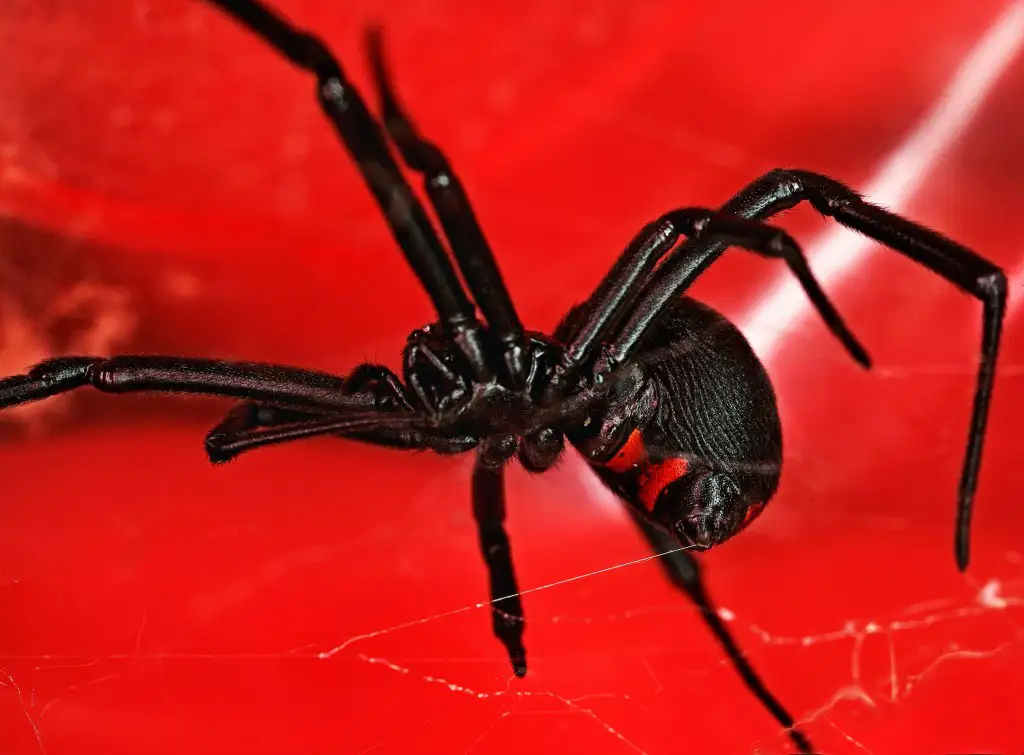
Black Widow Spider | Pictures of Spiders“The two venomous spiders common to this area are the black widow and the brown recluse, and we have calls every year from people bitten by both of them,” Kumar said.
In 2014, the Tennessee Poison Center received almost 300 calls regarding spider bites. More than half of these were about brown recluse spiders, and 40 calls were about black widow spiders.

“Most patients bitten by these two spiders experience only minor local effects,” Kumar said. “A very small percentage of patients, particularly the very young or the elderly, may be at risk for a severe reaction to a venomous spider bite.”

Brown Recluse

Brown recluse spiders are native to Southern and Midwestern states. They are medium sized, may be light yellowish brown to dark brown in color, and are distinguished by the characteristic violin shaped mark on the back.

They seek out dark, warm, dry environments such as attics, closets, porches, barns, basements, woodpiles and old tires.

“The bite of a brown recluse may cause mild stinging or pain, and could worsen becoming painful and itchy in the next two-to-eight hours,” Kumar said. “The bite site may be itchy and red, and is often followed by the development of an extremely painful area which is usually blue or purplish in color, surrounded by grayish ring, which is in turn surrounded by a red outer ring—a typical ‘bulls eye’ pattern.”

Kumar said the recommended home treatment for a brown recluse bite is to wash the area with soap and water, apply ice, and get a tetanus booster if necessary. “The bites usually heal very well if they are kept dry and clean and left alone,” she said.

But some people develop systemic reactions to a brown recluse bite. Twenty-four to 72 hours after a bite, the patient may develop a fever, rash and muscle pain, and the toxin from the bite may be causing hemolysis, or destruction of blood cells.

“If systemic symptoms are noted, the patient will need to have his or her urine tested for the presence of hemoglobin or blood. If the urine test is positive for blood and/or the patient has signs of rash and fever, the patient should be admitted and observed for hemolysis,” Kumar said. “This is especially important in children under 12 years of age, as toxin induced hemolysis can occur very rapidly.”

The Black Widow

The Black widow spider is glossy black in color, and identifiable by a reddish or orange colored hourglass marking on the abdomen. They are usually found in dark areas such as crawl spaces, inside boxes, water meter compartments and piles of firewood.

“People who are bitten by a black widow may not even realize it at first,” Kumar said. “The bite feels like a pinprick, and often there is minimal local reaction—maybe a little bit of pain or redness at the site, which usually goes away quickly.”

If those effects are all that occur, the bite can be managed by washing the area with soap and water, applying ice, and, if needed, getting a tetanus booster.

However, some black widow bites have much more severe systemic effects. These effects may start two to four hours after the bite, and can include headache, nausea, vomiting, changes in heart rate and blood pressure, painful muscle cramping, muscle twitching in the affected extremity, and even board-like rigidity.
“If any of these symptoms are noted, the patient will need to be monitored at a hospital, and treated with muscle relaxers, narcotics or benzodiazepines,” Kumar said.

Fortunately, most spider bite patients recovers completely, but knowing how to avoid and treat such bites is critical, especially in those who encounter attics, crawlspaces and other areas where spiders live.

What If You Swallow a Bug?

If you are running around outside or driving with the windows down in the car you are at risk to swallow a bug. But is the consumption of a bug going to be a risk to your health?

Is it safe to swallow a bug?

Smaller gnats and flies are most likely what you would swallow. In this case, you are not going to do harm to your body. It is less probable, but you could swallow a bee or a wasp. If you were allergic to a bee or wasp sting and accidentally swallowed one of the insects it could be an immediate life-threatening condition.

In this Wall Street Journal video, Dr. Bobbi Pritt highlights that it is a concern to be vigilant not to swallow fleas or beetles. These can be in your home and in your food and can transfer tapeworms (among other parasites).

Around the world, it is a common food source to eat bugs. In some circles, the consumption of bugs is seen as a positive as it is a rapidly renewable food resource. Let’s hope that we choose insects to eat versus insects that choose to be eaten by us.

Mosquitoes vs Mosquitos

Mosquito Plural Spelling from Meriam Webster Dictionary | Mosquitos vs MosquitoesThe English language is full of quirks, and one of them is how we pluralize words ending with the letter “o”. On one hand, we have a lot of words where we add an “-es” to the end: for example, tomatoes and potatoes. On the other, we have several instances where we only add an “-s”, such as logos and photos. So, that brings us to the question – how do you spell the plural version of the word “mosquito”? Should it be mosquitos or mosquitoes?
What Is the Plural Form of “Mosquito”?

Some people spell it mosquitos while others spell it mosquitoes. So, who’s right? The answer is that both versions are correct; you are okay to use either spelling of mosquitos or mosquitoes. According to the Merriam Webster Dictionary, both versions are right in the eyes of the grammar police!

Though it may seem strange that both are right, mosquito isn’t the only word that has multiple correct spellings in the plural form. Check out these similar words and their correct pluralized forms:

  • Buffalo: buffalos, buffaloes
  • Volcano: volcanos, volcanoes
  • Tornado: tornados, tornadoes

So, if you see the grammar police giving anyone the shakedown about using mosquitoes vs mosquitos in the wrong context, well you just send them over here to Johnson Pest Control

Bug Bites To Be Concerned About

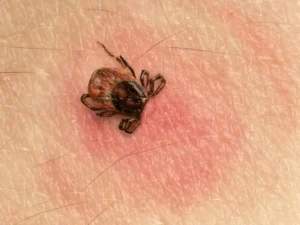
tick bites human - don't let it happen to you with tick extermination from Johnson Pest ControlThere are a lot of bugs out there that can bite you (or sting) but what bug bites do you need to be concerned about the most?
1. Deer Tick Bite

The deer tick is the primary cause for Lyme Disease today. Lyme Disease for decades as been more of a northeastern United States issue which has made it difficult for an accurate diagnosis. But in recent years has shown up all over the United States and medical professionals are getting more familiar with the tick bite and Lyme Disease. The primary tick to be concerned with is the Deer Tick (aka. Blacklegged Tick) and the transfer of bacteria from their bite. If you are bit by a Deer Tick then it is a good idea to keep the tick for positive identification and to visit a medical doctor. If you did not notice a tick bite, of a bite without being able to identify the tick, then be on vigil for the distinctive ‘bullseye’ rash.

2. Brown Recluse Bite

The brown recluse spider is one of three venomous spiders in the United States, one of two which we find here in Tennessee (and the Southeast in general). Identifying brown recluse spiders can be confusing to many people. When they bite a person it is usually when the spider has been trapped against a person (in a shoe, under sheets or pillow, etc). The venomous bite is generally not fatal but has been attributed to creating circumstances that lead to death (think of a severe allergic reaction). Most often the brown recluse bite will create a skin lesion. The lesion can be severe enough to require professional medical treatment. If you have a brown recluse bite seek out medical support.

3. Black Widow Bite

The black widow spider, unlike the brown recluse, is quite easy to identify. They are dark black and have a nice bright red splash of color on their back (often hourglass in shape). The black widow spider can be found in areas that have some clutter or coverage that are not disturbed by humans. Basements can be common for inside the house, woodpiles or sheds can be common for outside the home. The bite does not leave big distinctive marks in comparison to what insect bites we have already mentioned. You will likely have pain centering around the black widow spider bite that will shift into the abdomen and back. Cramping, sweating and a host of other symptoms will follow the initial bite pain. Seek medical support with the first 8 hours of a bite. Be sure to try and capture the spider to get a solid identification.

OSHA Black Widow Spider Facts PDF

Other bug bites that you should be concerned about are mosquito bites and bee stings. The mosquito bites could lead to acquiring a disease such as West Nile Virus or Chikungunya. Bee stings can be a huge concern when someone is allergic to the stings. In the case of young children one may not know if they are allergic to bee stings yet, so adequate precautions should be taken.

Do It Yourself Fly Traps

DIY Mosquito Trap (with Solar Panel Option)

This guy has some pretty simple set ups for capturing mosquitoes, but he also has the most expensive options. Depending on what you have in your garage or work shed you might already be able to put something like what he has here together. If you are worried about electric usage then he even throws in a solar powered option for getting rid of mosquitos.

More Mosquito Fans

Here is another version of the mosquito fan and screen set up.

Instant Fruit Fly Trap

This little bug trick we’ve seen before. It can work. It can also get pretty nasty, so don’t leave one of these hanging around on the counter top for days. You probably shouldn’t try to clean it out and use it again either, just toss it and start with a new one.

Homemade Fly Trap

Same technique as the fruit fly trap. You will want to change up the baiting mixture and amount of bait to capture flies.

Mosquito Trap With a Twist

This guy has the same 2-liter bottle set up, but his concoction of brown sugar, yeast and water he says will work with mosquitoes. This could be the makings of some fun experiment to see which bottle set up gets the different bugs.

Milk Jug Fly Trap

This particular trap doesn’t a whole lot of effort to make happen. You could likely create this one before you go to bed this evening.

Organic Fly and Mosquito Control

This gal has all kinds of tricks for getting rid of mosquitoes and flies around your yard. Most of them seem to be commercial products you can buy, but you can also go about creating a number of them on your own.

Natural Mosquito Repellant

This is pretty simple. Seriously simple. The trick might be to try it out and see how many limes you need to repel mosquitos around your home.

We hope you have some fun ideas to try out at home. Remember, if you have a problem that persists or gets invasive then do not hesitate to call us here at Johnson Pest Control.

What Is Digging Holes In My Yard?

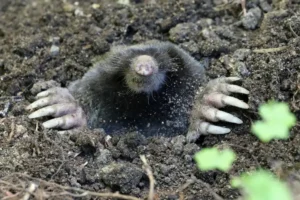
A black mole poking head through a burrow - keep moles away from your home with Johnson Pest Control in TN

It has happened to all of us. We go walking through the yard and step into a carved-out hole or tunnel in the ground that almost breaks our ankle. But knowing what animal that has created this newfound creation in our yard can be tough to diagnose. Cindy Decker, a columnist for The Columbus Dispatch (Ohio) shared some of her garden expertise to help identify what animal might be digging around the house.

What Is Digging Holes In My Yard?

The sizes, shapes and locations of animal holes all tell a tale.

Some excavations signify a search for food; others speak to homebuilding.

To learn how to identify the source of backyard digging, I turned to Adam Turpen, director of SCRAM! Wildlife Control, the arm of the Ohio Wildlife Center that offers humane wildlife solutions.

Moles

Moles can be obvious in the lawn, leaving serpentine raised tunnels through which they travel and feed.

Although the look isn’t pleasing, Turpen said, “These animals are aerating the lawn.”

The entrance to the tunnel is a quarter-sized hole.

If you have moles, you have tasty things in the soil. Moles eat earthworms and grubs.

Turpen and others recommend treating the lawn for grubs to help control moles.

The Purdue University Extension warns, though, that the method isn’t foolproof because other food sources remain.

Chipmunks

When digging in the garden, chipmunks are looking for food, maybe some seeds or a flower bulb.

Those holes will be fairly shallow.

When they burrow, chipmunks can create extensive tunnel systems. The entrance hole, Turpen said, is about the size of a 50-cent piece — a clean hole without a lot of dirt around it.

Chipmunks like to burrow under sidewalks, next to houses and sheds, and along root systems of trees.

According to the Humane Society of the United States, chipmunks don’t generally damage property.

Skunks

Skunks digging for food leave conical holes about 3 inches deep, as if a pencil were stuck in the earth and then swirled around, Turpen said.

Their burrows have entrances about the size of a grapefruit, he said.

“You’d generally see pebbles build up around the front.”

Skunks often dig under decks, sheds and porches.

Raccoons

Raccoons dig holes similar to those of skunks but perhaps slightly larger.

Hair caught on branches near a hole might help identify the creature using it.

When raccoons forage for food in a lawn, Turpen said, it will look as if someone has rolled back the sod.

Groundhogs

Groundhog holes are larger and deeper than others — sometimes the size of a soccer ball, Turpen said — with

earth mounded at the entrance.

Other animals, such as red foxes, sometimes take over groundhog holes.

“They are the ones who generally do the work,” he said.

Burrows might — but don’t always — have multiple entrances and exits.

Cindy Decker, At Home editor, writes about native gardening and living with wildlife.

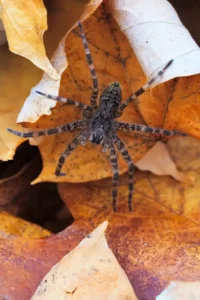
What are Wolf Spiders?

Wolf spider crawling on a pile of orange fall leaves - keep spiders away from your home with Johnson Pest Control in TN

Wolf Spiders are common to find across the world. There are thousands of species of Wolf Spiders that you can find around the world. So it is no surprise that people get confused when spotting the wolf spider and confusing them at times with other spiders.

What To Know About Wolf Spiders

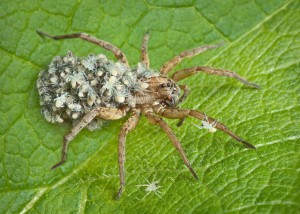
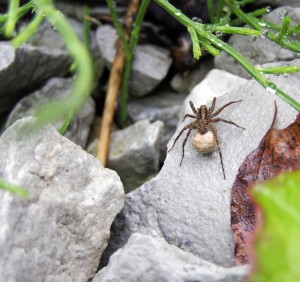
  • Wolf Spider carrying its egg sack
    Wolf Spider carrying its egg sack

    Wolf Spiders generally hunt at night. This affects their eye design, which is distinctive in identifying the spider.

  • Wolf Spiders hunt and live alone. They are known to carry their babies on their backs and carry an egg sack with them. But you rarely find more than one at a time.
  • The wolf spider depending on their surroundings and species has developed various ways they hide, live and hunt. Unlike most spiders that spin the web and wait for dinner to show up the wolf spider has been known to hunt down (even chase down) it’s prey.
  • Wolf Spiders do have a venom (as do most spiders) but their bite is not harmful to humans, except for a minor rash. Generally they don’t care about you at all (you’re a bit too big for their appetite) so if you are bitten by a wolf spider it is an accidental occurrence.
  • The wolf spider is a great pest to have around your home to deal with other pests. If you don’t have other pests for them to hunt you are likely not going to find the wolf spider as much.
  • Wolf Spiders have two eyes (eight total) that are unusually large in comparison to the rest of their eyes. This gives them a look that feels almost as if you are staring at something that doesn’t have eight eyes.

Wolf Spiders are often confused for the Brown Recluse spider here in Tennessee. In most cases, the misidentification comes because of markings on some wolf spiders can look similar to the violin marking on the brown recluse. One big distinction between the two spiders is their size. The wolf spider is much larger and thicker than the brown recluse. The set up of the eyes of the recluse and wolf spider is also very different, but who really wants to get that close to a spider to look into their eyes.

A fun thing you can do in your yard (especially with kids) is to go around the yard with a flashlight. The lights will reflect off the wolf spider’s eyes and give a little shine back to you. You can get this same shine during the daytime, but as we mentioned earlier, they are nocturnal hunters and are more easily findable in the evening.

A mother wolf spider keeps all her babies on her back after they hatch from an egg case she carries on her abdomen.

West Nile Virus in Tennessee

West Nile Virus makes its appearance in Tennessee at some point every year. Nashville Metro Public Health officials have alerted that the West Nile Virus has been found in mosquitoes in their area.

Metro Public Health Department’s Pest Management Division has its first positive tests of West Nile after trapping mosquitoes near the intersection of 28th Avenue North and Clifton Avenue. So far, Davidson County residents have escaped contracting the virus this year.

To detect the West Nile Virus officials will collect swaths of mosquitoes from various areas to test for the presence of the virus. This finding is not due to a local resident being diagnose with the West Nile Virus.

So how can you protect yourself from getting the West Nile Virus?

The health department recommends that people decrease their risk to exposure by limiting time outdoors at dusk and night, wearing an effective mosquito repellant and wearing socks, long-sleeved shirts and pants. Screens on windows and doors should also be in good repair.

People can also protect themselves by removing items from their yard that collect water and by cleaning clogged gutters.

There are other methods you can implement to deminsh the mosquito population that we’ve highlighted on this site before. Use mosquito repellant plants, you can even grill away some of the bugs to keep mosquitoes at bay. This report is from Nashville, but West Nile Virus has been in our Knoxville area before and taking precautions is always a good idea.

Buggiest Cities

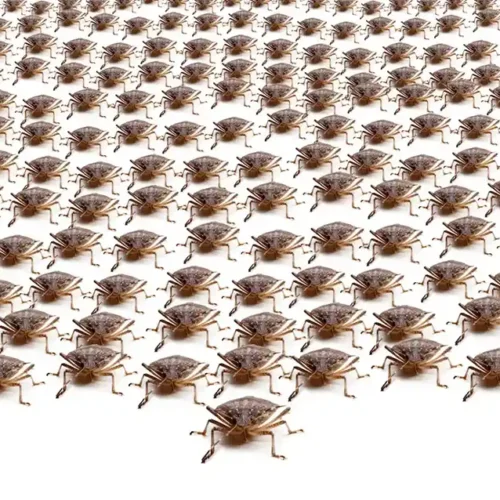
Repeated pattern of stink bugs against a white background - keep pests away from your home with Johnson Pest Control in TNFAIRFAX, Va. – The summer months usher in warm temperatures and plenty of sunshine, however, the season also brings with it plenty of bugs. While pests are problematic across the country, the National Pest Management Association (NPMA), compiled the list of the “Top 10 Buggiest Cities,” which will leave residents buying repellent in bulk and looking for ways to prevent infestations.

According to traffic to NPMA’s website – www.pestworld.org – the “Top 10 Buggiest Cities” are:

  1. New York
  2. Los Angeles
  3. Chicago
  4. Washington, DC
  5. Philadelphia
  6. Atlanta
  7. Boston
  8. San Francisco-Oakland-San Jose
  9. Dallas-Ft. Worth
  10. Houston

“While these 10 cities may be the buggiest, pests are plentiful in every city and state. As Americans spend more time outdoors during the summer months, we encourage them to take precautions to protect themselves, their families and their pets from the multitude of health risks posed by pests,” noted Missy Henriksen, vice president of public affairs for the NPMA.

Here are NPMA’s summer pest prevention tips:

  • Seal cracks and small openings in the home’s foundation, around windows and doors.
  • Repair ripped window screens.
  • Keep tree branches and bushes trimmed and away from the house.
  • Eliminate sources of moisture or standing water.
  • Inspect the outside of a home for nests built by stinging insects — typically found in the eaves under roofs.
  • Keep kitchen counters clean, and store food like sugary cereals in sealed containers.
  • Empty garbage containers frequently and seal indoor containers.
  • Make sure pets’ food and dishes are not left out for long periods of time.
  • Always apply an insect repellant containing DEET, picaridin, IR3535 or oil of lemon eucalyptus when spending time outdoors, and reapply as directed on the label.
  • Keep grass cut low. Remove weeds, woodpiles and debris.
  • Inspect yourself and your family members carefully for ticks after being outdoors.

The NPMA, a non-profit organization with more than 7,000 members, was established in 1933 to support the pest management industry’s commitment to the protection of public health, food and property. For more information, visit PestWorld.org.