Tennessee Bugs that Hurt

Tennessee Bugs that HurtThere are a lot of bugs out there in the world that do nothing but look weird and freak us out. However, there are a number of bugs here in that actually do pose a danger to humans either through carried diseases or poisonous bites. So from West Nile to the Brown Recluse here is a pretty good run down of Tennessee bugs that can cause a little hurt.

This article from the Murfreesboro Post (middle Tennessee) highlights a handful of the bugs that you need to be concerned over.

For years I tended to not worry too much about being bitten by mosquitoes, ticks or other common insects.

For years I tended to not worry too much about being bitten by mosquitoes, ticks or other common insects.

Although I considered the bites a nuisance, I didn’t pay much attention to the need for protection from these aggravating pests.

Times have changed, though. Now we all should be paying heed to the warnings from experts to avoid being bitten by local ticks, mosquitoes and spiders.

The most common pesky bites come from mosquitoes. In our area some mosquitoes are carriers of the West Nile Virus. Each year local health departments will confirm through testing that a small percentage of local mosquitoes are carrying West Nile virus.

Not all mosquitoes carry the virus. The question is whether you really want to play the mosquito lottery. It is impossible to know which ones carry the virus and which do not.

There is no reason to panic, but caution and prudence is advised. Even those that are bitten by a mosquito carrying West Nile have a relatively small chance of becoming seriously ill.

According to the Centers for Disease Control (CDC), West Nile virus will cause a fever and flu like symptoms in about one out of five people who are infected.

For some unfortunate victims, however, the disease can be serious or possibly even fatal. Fortunately less than 1 percent of those infected will be subject to the serious neurological illness (meningitis or encephalitis) that can be fatal.

However, the outcome of the serious consequences of the disease can be so tragic that it is a good idea to use repellants wisely.

Many people are also concerned about Lyme disease after a tick bite.

In our area Lyme disease can be transmitted by a tick bite and can be a very serious disease, but it is still very rare. Although the problem is significant in Northern states, in the South is it not a widespread. Less than a dozen confirmed cases are reported on average annually in Tennessee.

However, Lyme disease can be very serious if an infection occurs. Widespread arthritic pain and other symptoms can go on for years. Treatment with antibiotics is necessary if Lyme disease is confirmed.

The disease is carried primarily by deer ticks, which can be identified as a small tick with a black spot on their back.

Although many people including some health care providers believe that another tick known as the Lone Star tick also carries Lyme disease, the CDC refutes this belief. The Lone Star tick can be distinguished by a white spot on the back.

Although it does not carry Lyme disease, the Lone Star tick has been implicated in causing severe red meat allergies that can result in serious illness.

Tennessee ticks also may be carrying Rocky Mountain Spotted Fever. Although the name Rocky Mountain Spotted Fever (RMSF) may lead one to assume it is primarily a problem in Western states, in fact Tennessee is one of the states where the disease is more widespread.

As the name implies, people that have been infected will often have an occurrence of a rash that is associated with wide spread red spots. The illness can be very severe or possibly fatal in some individuals.

A couple of common spiders can be a problem for Tennesseans. The Brown Recluse spider is quite common in businesses, homes, storage sheds and other buildings in the area.

As the name implies the brown recluse tends to avoid people and will only bite if injured. This can happen accidentally in beds, furniture, when putting on shoes or boots or in other circumstances. If the spider cannot escape and a body part ends up pressing against it, a bite can occur.

Brown recluse spider bites can cause local tissue damage that can result in permanent loss of tissue. It is very rare that wide spread damage occurs.

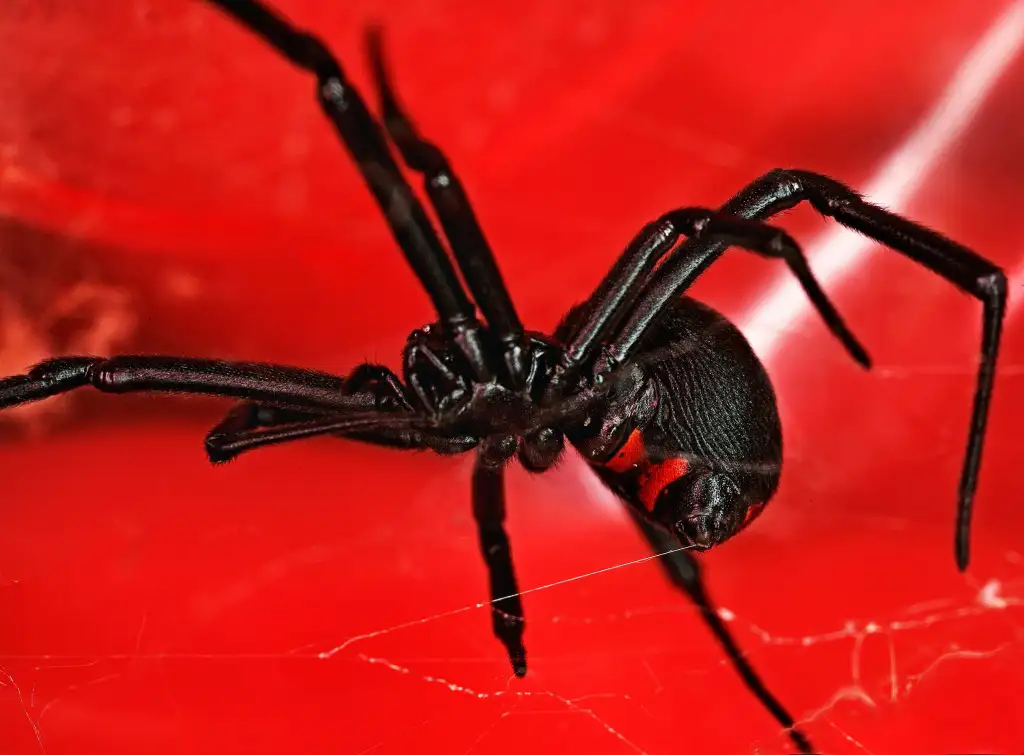
Black widow spiders can be found around household foundations, under rocks and logs and in other outdoor places. These spiders are a deep glossy black with a bright orange or red hourglass shape on their underside.

Contrary to legend, black widow bites are not likely to be deadly and rarely cause permanent damage to the victim. The bite can cause very severe pain and other symptoms that can last for a week or more however.

Taking the time to teach family members how to avoid being bitten by these insects is the best plan to avoid the potentially serious consequences of a bite.

Pictures of Spiders

Last week we highlighted ways to identify the brown recluse spider (Brown Recluse Pictures). This week we thought we’d more pictures of spiders so that you can help friends properly identify the spiders when they post pictures onto their Facebook pages.

Wolf spider in a spider web with insects stuck in the web - keep spiders away from your home with Johnson Pest Control in TNThis is a Wolf Spider. It is generally thicker in the body than other spiders you are going to find around the home. The Wolf Spider is harmless to humans, but can be a real problem if you try and kill one that has a few hundred baby spiders on it’s back. Unless these are sitting on your favorite chair it is suggested to let them be.
Cellar Spider and Coin

This is Cellar Spider. Harmless to humans you will likely find these, well, in the cellar or crawl space of the house. They are small in size and can be found in bunches.

Black Widow Spider | Pictures of Spiders Black Widow Spider | Pictures of Spiders

The Black Widow Spider is one of the three poisonous spiders we have in the United States. The Brown Recluse is one of the other ones which we have in the state of Tennessee. The Black Widow generally is a loaner, so if you find one it is unlikely you will be finding others. They will not attack you unless they are provoked or intruded on. If they do bite you then you will want to seek medical attention. The Black Widow is very distinct with its dark black color and hour glass shaped red markings on their backsides. If you can confidently get rid of a Black Widow, without risking getting bit then feel free to do so. Otherwise consult a pest professional.House Spider | Pictures of Spider

House Spider | Pictures of Spider

The House Spider is a spider that you would find, well, in the house. Nothing that fancy about the House Spider. They will be setting up shop and hunting around your house to catch some food to eat. Humans, however, are far from the house spiders menu. They can freak you out, and your kids, but they are harmless.

Orb weaver spider in a web - Keep spiders away from your home with Johnson Pest Control in Sevierville TNThe Orb Spider (there are many versions of the Orb Spider) come in lots of different colors and patterns. Generally harmless to humans you will likely find the Orb Spider outside in the garden. You could fall victim to walking through one of their spider webs as you move through some bushes while doing your weekly gardening activities. Orb Spiders are overall helpful to the outside of your house as they feed on a number of the bugs that you would rather not have to fly around your head.

So there are some pictures of spiders that you will find in and around your home this season. If you see a huge amount of any spider then you will want to call for a consultation and some services. Having a spider here is perfectly normal, having a few hundred, well, that is just downright scary.

Prevent Mosquitoes This Spring

Prevent Mosquitoes This SpringOur neighbors over in Greenville, TN are getting out to prevent mosquito growth this spring. It is that time of year where mosquitoes will start to show up at parties, the backyard, the soccer fields, etc.

They have a solid list of suggestions that you can do to help keep prevent mosquitoes from making a meal out of you.

To further reduce the mosquito population and to prevent illness, citizens are reminded of the following precautions:

  • apply insect repellent containing DEET (N,N-diethyl-meta-toluamide) while outdoors,
  • consider staying indoors at dawn, dusk and in the early morning hours, which are peak mosquito biting times,
  • wear long-sleeved shirts and long pants, if possible, while outdoors, and place mosquito netting over infant carriers.

To eliminate mosquito breeding areas, citizens should:

  • get rid of old tires, tin cans, buckets, drums, bottles and any other containers that hold water,
  • fill in or drain any low places, like puddles or ruts, in lawns,
  • keep drains, ditches and culverts clean of weeds and trash so water will drain properly,
  • cover trash containers to keep out rainwater,
  • repair leaky pipes and outdoor faucets,
  • empty plastic wading pools at least once each week, and store them indoors when not in use,
  • fill in tree rot holes and hollow stumps that hold water with sand or concrete,
  • change the water in birdbaths, plant pots or drip trays at least once a week,
  • and keep grass cut short and shrubbery well-trimmed around the house so adult mosquitoes will not hide there.

What are Mites?

A cluster of dust mites in a microscope - keep pests away form your home with Johnson Pest Control in TNOftentimes you will hear someone mention “mites” as a possible cause to a skin rash or itch. However, they are you might not actually know what they are. Let alone how to deal with them.

So What Is a Mite?

First off, it is rarely one mite. Mites are small (think the size of the period at the end of this sentence small) parasites that thrive off host environments. Often in the East Tennessee area we find that mites get in and around homes through wildlife that has made their home in and around your home. Their hosts could be birds or rodents (mice, rats, even cats) which get into your attic spaces or under the crawl spaces. Then, once they die off the mites will go looking for new hosts. Or, if you get close enough (like in the case of a cat) the mites will just move over to you.

Mite various in type and preference of hosts. There are actually mites that prefer insects as their hosts. It is not what we normally come across, but they are out there. Likely what people reference when you have a rash or itch as being ‘mites’ is Scabies or a human itch mite. Sometimes people will be referencing ‘chiggers’ which is the common term for Trombiculidae mites.

So What Do I Do If I Have Mites?

Your first course of action to get rid of mites is all dependent on what and where the mites are originating from. If you are getting mites in your home and it can be determined that rodent is bringing them into the home then, obviously, the plan is to get rid of the rodent and prevent access to the home. From there you can clean and disinfect areas to get rid of the mites. As professional pest control exterminators, we have access to use some sprays and dusts that can be more effective than a consumer grade product. If the mites have found their way

If the mites have found their way onto your skin then you can get various lotions/creams or medicines to help kill the mites. It is very important to follow directions for applications because getting rid of mites is highly dependent on the thoroughness of you treatments.

Imagine that you will need to thoroughly cover your body, possibly cover much of your families body, wash and clean the home with great detail.  Mites are often microscopic and can easily be missed with a haphazard cleaning.

Mites might not be the highest priority pest in your life, however, they can quickly become a real nuisance if an infestation arises and you let the problem persist.

Brown Recluse Pictures

The Brown Recluse is one of a few spiders in the United States that is poisonous. It is also a spider that is readily found in Tennessee. One of the other poisonous spiders that can be found in Tennessee is the Black Widow. The Black Widow spider has a really distinct look to it which makes that spider easy to identify. The Brown Recluse, however, can be difficult to identify even if you know what you are looking for.

Here are a series brown recluse pictures to help you know whether or not the spider you are seeing around your home is a brown recluse.

Brown Recluse Pictures

A brown recluse spider against a white background - keep spiders away from your home with Johnson Pest Control in TN

A brown recluse camouflaged on a bed of sticks - keep spiders away from your home with Johnson Pest Control in TN

Brown Recluse Pictures | Johnson Pest Control
This is a great shot of the Violin marking on the brown recluse that is a primary identifier

Brown Recluse Pictures | Johnson Pest Control
Brown Recluse spider isolated on a white background crawling


Spiders Spiders Everywhere!!

Brown Recluse Spiders Everywhere in TennesseePerhaps you are like me and you have a little kid in the house that is attuned to point out every bug (and anything that looks like a bug) in our house. We don’t have many, but even with our best precautions we have been finding ourselves with more and bugs in the house.

The creepy bugs are when spiders get into your house. Often times they are harmless, but in East Tennessee we do have Black Widows and Brown Recluse spiders which are two poisonous spiders that can hurt humans.

Crazy still is that spiders might only be growing in numbers and aggressiveness.

From the Washington Post: Warmer Weather May Make Spiders Fast and Loose

One major downside of global warming? Spiders. So many spiders. Previous studies have suggested that warmer weather may mean more spiders overall (and bigger ones, at that) and may make poisonous species more common as more and more regions fit their temperature preferences.

But apparently we have to worry about them getting fast and clumsy, too. Is a fast and clumsy spider better than a slow, methodical spider? Unclear. Both sound terrible.

In a recent study published in the Journal of Experimental Biology, researchers tested how temperature changes a spider’s ability to move. It’s a good question: Spiders rely on fluid to move their limbs. Instead of using muscles like we do, their bodies control the ebb and flow of fluid to fill up and move different limb portions. It would make sense for that fluid — and by extension, their movements — to change based on the temperature.

Sure enough, when the researchers tracked the movements of spiders at different temperatures they found that the cold made them sluggish. At 59 degrees Fahrenheit, the spiders moved no faster than 20 cm a second. At the top temperature of 104 degrees, they nearly tripled that speed.

But the spiders weren’t taking bigger steps — just more of them. They went all the way from four steps a second to as many as 10. And that made them clumsier. Their joints weren’t as coordinated as they were at lower temperatures. This is probably because the fluid that controls their limb movement can’t keep up with the high speeds that come with high temperatures.

It’s unclear whether or not this change is enough to really hurt the toasty spiders. But the researchers suggest that it may be why the arachnids they studied — Texas Brown tarantulas — come out to hunt for food in the cool evening instead of soaking up the sun.


Spring Bugs To Watch Out For

Spring Bugs, the Stink BugSpring is in the air. It is about time, so tired of this past winter.

With the onset of spring you can now anticipate spring bugs to be in the air, the kitchen, yard, garage, bedrooms, office,.. did we miss someplace?

So what is a good plan to go about pest proofing spring bugs?

Try going room by room.

Kitchen: The kitchen has food, which is one of those things that spring bugs are actively searching for. If you can eliminate food sources you can go a long way to get rid of spring bugs. You can expect ants, cockroaches and Indian meal moths which are some of the most common pests found in the kitchen. These pests can contaminate food and spread bacteria, so you want to prevent them or get rid of them quickly. A quick tip is to store all food in airtight plastic or glass containers, immediately wipe spills, vacuum often and empty the trash frequently. If you can keep those practices this spring the bugs will be at a minimum.

Bedrooms and Bathrooms: Moths might have taken up residence in your closets feeding on natural fibers like silk, cotton and wool. Silverfish are also commonly found in bedrooms and bathrooms and can damage synthetic fabrics, books and paper products. Washing, ironing or dry-cleaning winter garments before storing them for the summer helps to kill off any possible bugs taking up residence on your clothing. Using fans or dehumidifiers to eliminate damp conditions will also help to thwart bugs in your bedroom and closet areas. Ensure openings where pipes enter the bathroom are sealed. This keeps bugs from feeding on waste down the drains and then emerging in the bathroom.

Living Spaces: Common areas around the house are just as viable places to have spring bugs emerge. Pets bring fleas and ticks into the house often. Snacks that are discarded or left behind can provide an attractive food source and mice. Keeping all living areas crumb free by removing snacks and vacuuming often (even under the furniture) will go a long way to helping you keep a clean home and a pest free living space. Keeping the family pets groomed and their flea and tick prevention up to date will help to keep them from introducing bugs as well.

Garage: Stored boxes and sporting equipment in the garage provide the perfect winter harborage for pests like squirrels, mice and rats. When you are unpacking your spring and summer gear, look out for signs of nesting and rodent droppings (sometimes even dead animals). Using airtight plastic storage bins for seasonal items as well as storing items off the floor as possible will help to prevent spring pests from making a home out of your garage. Keeping the garage clean will also prevent pests from making a home our of your garage.

Outdoors: Cleaning and pest proofing around the exterior of the home goes a long way in keeping pests such as cockroaches and termites outside where they belong. Cleaning up standing water around the house will help control the population of pests like mosquitoes. Sealing cracks and small openings around the foundation of the home, including entry points, for wires and pipes will help make it difficult for spring pests to get into the home. Keeping garbage collection areas cleaned will ensure all receptacles are tightly closed will keep roaches from feeding near the home. Trimming back branches and shrubbery away from the house will take away an access point for pests to get into your home.

Pick a room this weekend and get started spring cleaning to prevent spring bugs from becoming a permanent resident.

Mosquitoes Chikungunya Disease

With spring weather comes the fun of mosquito season. For years we have been hearing and watching out for West Nile Virus. In addition to West Nile virus, a new disease carried by mosquitoes that local authorities are warning about is Chikungunya disease. For mosquitoes chikungunya disease has its origins in the Caribbean. Since last year it has started to spread throughout the United States.

Local authorities are warning residents.

From WBIR

With warmer weather comes the re-arrival of disease-carrying insects such as mosquitoes, which is why the Tennessee Department of Health is urging state travelers to be aware of the growing chikungunya virus.

The first Tennessean to contract the virus did so this past year, and 42 additional cases followed. The one constant? All cases involved travel outside the state.

“Travel plans to warmer destinations should include necessary precautions to avoid mosquito bites,” Health Commissioner John Dreyzehner said in a news release. “Because there is no vaccine to prevent chikungunya virus disease, the only way to prevent its spread is the effective use of repellants and personal protection strategies.”

Chikungunya is rarely fatal but can cause fever, joint and muscle pain, headaches, fatigue and rash.

To best avoid the disease, use insect repellants, treat clothing with products containing permethrin, avoid perfumes and scented deodorants or soap, and wear long, loose and light clothing. These tactics also can ward off other diseases carried by mosquitoes, such as dengue, malaria and West Nile virus.

The Center for Disease Control keeps up to date information about chikungunya spread and worth checking out.

How to Get Rid of Fleas

How to Get Rid of FleasI just noticed the other day that my dogs have started scratching. They are doing that scratching that can only mean one thing, fleas. So how to get rid of fleas so they stay gone?

Generally it is not that difficult.

Unfortunately fleas can be a tough battle for many of us in East Tennessee. When we live so close to wildlife, fleas (and ticks) can come right into our back yards quite easily. So often times we might be fighting that proverbial “uphill battle”.

How To Get Rid of Fleas

  1. The first strategy for getting rid of fleas is to keep your yard and home clean. Mowing your yard regularly, cleaning up leaves, dirt piles, etc. Keeping your yard in top shape will help keep the flea population at a minimum.
  2. Similarly, keeping your home clean will keep the fleas from infesting in your house. Vacuum constantly and wash pet beds often. If a pet sleeps on your bed then wash the sheets as much as you can. A single flea is not a huge ordeal, it is when that flea is left unchecked in order to procreate that you will find yourself with some bigger infestation problems. Dump out your vacuum bags immediately after so that the fleas don’t linger in your home.
  3. A good pro-tip is to put a pet flea collar in your vacuum bag or cylinder. This will help to kill off any fleas you clean up.
  4. Check out your crawl space. If you have cats, or know you have a rodent friendly yard you want to make sure you do not have anything decomposing underneath the house. Fleas will attach to that carcass and then start to move into the house. Sounds gross, yes, and it is entirely true.
  5. If you do live close to the woods and know that wildlife frequents your yard then consider getting a professional yard treatment. This can help to ensure that fleas do not make a habit of calling your yard home. If you have a very large yard then consider treating just a fenced in area that the pets play in.

It is not hard to get rid of fleas, but you do need to keep at it. Fleas will sneak into your home in a quick minute. If left untreated they can become a real infestation that can add up the costs of extermination quickly. Beyond that, you will appreciate having a clean house and a content pet.

What Are Carpenter Ants?

Carpenter ants are one of those bugs that can be mixed up when trying to identify them. Many times people will confuse a carpenter ant with a termite, especially when they are swarming.

So What Are Carpenter Ants and What Should We Know About Them?

  • What is a Carpenter Ant?First and foremost, carpenter ants are,.. well, ants. The carpenter ant anatomy will look similar to that of a standard ant. You are going to see a head, thorax, and abdomen with varied sizes. A termite often times will be similar width through its whole body.
  • The carpenter ant antenna are crooked (bent) whereas the termite will have straight antenna.
  • The carpenter ants are social insects. They like to live and work out of a colony setting. So if you see a lone ant wandering around you are probably not dealing with a carpenter ant.
  • Carpenter ants do not actually eat wood, as termites eat wood. Carpenter ants will chew wood to make tunnels for their colony to seek shelter to lay eggs and live out of. You will often find little sawdust piles around the wood that carpenter ants are chewing on. Termites on the other hand will actually digest the wood they chew.
  • Carpenter ants set up a colony with worker ants, a queen, reproducers, and larvae. The workers are generally sterile ants without wings. These workers are likely what you come across when you find carpenter ants in and around your house. In the spring the reproductive females and males will fly off in an effort to mate and establish new colonies. This ‘swarm’ is similar in pattern and behavior to a termite swarm. The male dies after mating (tough life) and the female seeks a place to establish a new colony laying a series of new eggs.
  • The carpenter ant swarmers are pretty easily identifiable in comparison with a termite swarm. The termite swarmers will have wings that are equal in length. The carpenter ant swarmer will have different lengths in their front and back wings. Swarms can be pretty freaky so you might not want to get close enough to check them out, but that’s the easiest way to identify what you are dealing with.
  • Carpenter ant damage is generally not as intensive as termite damage can be. However, left unchecked for a lengthy period of time you could be dealing with some serious structural issues.
  • If you have some indoor nests then they likely started at some spots outside. So if you are keeping an eye out for carpenter ant swarms this spring then you will know if you need to tend to possible home invasion of carpenter ants.

If you use these carpenter ant facts as a check list then you will definitely be able to know whether you have a carpenter ant problem, or another bug problem. Treating carpenter ants can be tricky, especially if you are trying to treat a colony within the wood tunnels they have been chewing on. If you feel the colony is getting a little too close to your home for comfort then give us a ring at Johnson Pest Control and we will be happy to find a solution to your carpenter ant problems.