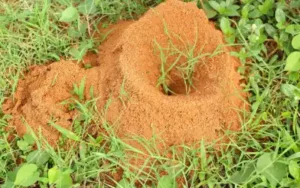
 Fire ants, often called “red imported fire ants” originate from Brazil but were introduced to the United States around 1940. Since then, they have spread throughout much of the southeast, including right here in Tennessee. Because these pests can pose a serious threat, it’s important to know how to recognize them as well as how to stay safe from their painful stings. Learn more with the ant control experts right here at Johnson pest Control.
What to Know About Fire Ants
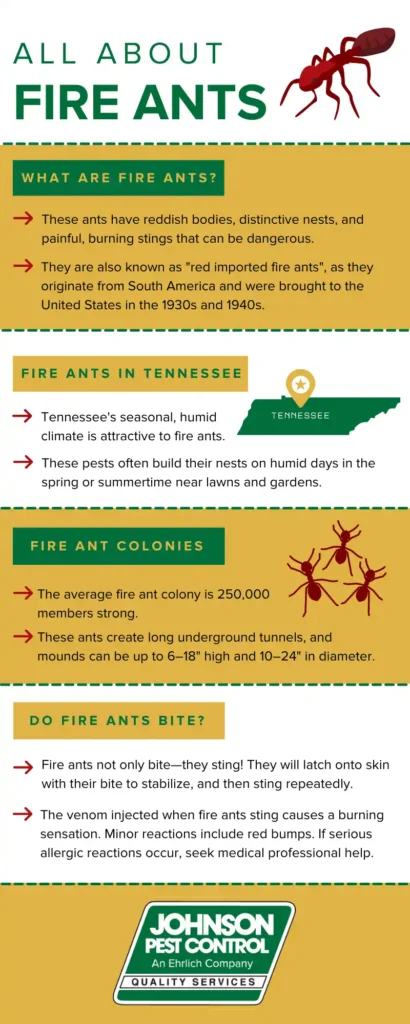
Fire ants differ from your typical house ant in a number of ways. The most important things to know about these potentially dangerous pests include:
- If a fire ant mound is disturbed, they will attack as one unit. When disturbed, the ants will begin spilling out ready to attack—and each ant will sting repeatedly.
- To begin a fire ant colony, queen fire ants mate with males, killing the male in the process, and fly to the site at which she’ll begin the new colony. The queen will lay up to 800 eggs per day, growing the colony to an average size of 100,000 to 500,000 ants.
- Fire ants don’t bite—they sting! Their stings can result in a burning sensation, hence their name. The sting site may swell and itch. A small pustule sometimes develops where the stinger enters the skin.
- If fire ants get on you, it’s important to quickly and repeatedly brush them off your skin. The ants can latch on tight, meaning shaking won’t repel them. If you develop symptoms from fire ants, it’s important to seek medical attention.
- Fire ants typically nest outdoors in open areas. Parks and fields are usually primary targets, but yards can be as well. The mounds are often found lining your grass and concrete, and they typically form on humid days.
Need Help Getting Rid of Fire Ants?
 How to Prevent Fire Ant Problems
 How to Prevent Fire Ant Problems
To thrive, fire ants need moisture and shelter. By making your yard less attractive to fire ants in the first place, you can keep fire ants away from your property. This is best done by taking care of your lawn and yard. Here’s how to prevent fire ants from building a nest in or near your property:
- Trim back your trees and shrubs to keep fire ants from traveling on them.
- Rake back any mulch, straw, or other landscaping at least 6 inches from the structure of your home.
- Mow the lawn regularly to avoid overgrown grass. Remove grass clippings and piles of leaves to eliminate fire ant harborages.
- Store outdoor trash cans and dumpsters as far away from the structure as possible and be sure they have tight-fitting lids.
- If you start to see a fire ant nest form, avoid contact and get in touch with your local ant exterminators for treatment.
Need to Get Rid of Fire Ants?
Trying to get rid of a fire ant mound yourself is dangerous. Their colonies extend far under the ground and feature multiple queens. Fire ant treatment should always be administered by a professional ant control expert to keep yourself and your family safe.
For fire ant treatment in Eastern TN, contact the ant exterminators at Johnson Pest Control today!
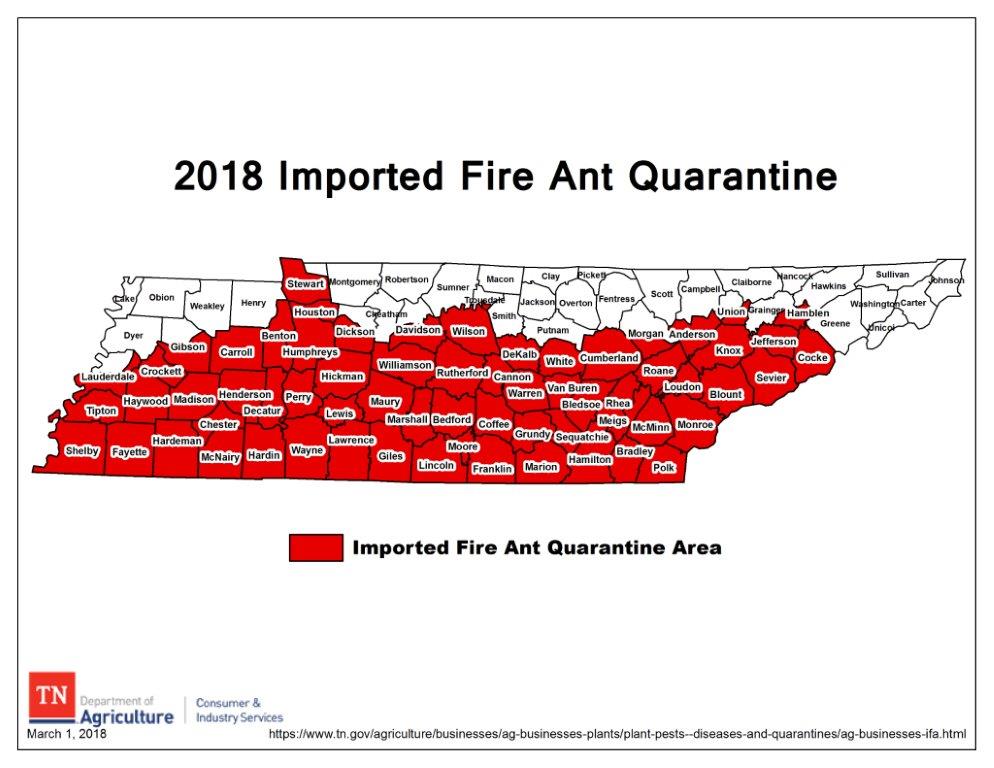 If you are getting out into the garden this time of year then you will likely come across some ants. The ants we all know we do not want to come across are fire ants. Fire ants are serious pests that will swarm and bite all over you, your children, and your pets if they are agitated. These pests are common in Tennessee, making it important to learn all you need to know about them and the threats they bring. At Johnson Pest Control, we are committed to helping our communities learn about the threats of fire ants. Read on to learn all you need to know about
 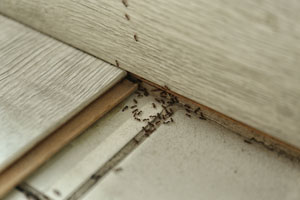 Most property owners have dealt with ants at one point or another. As the number one nuisance pest in the United States, it’s important to learn what you can do to keep ants away from your home. During the summertime, ant infestations spike in properties throughout the Sevierville TN area. To avoid the frustration of an ant infestation this summer, there are a number of things you can do to keep them from getting indoors in the first place. The team at Johnson Pest Control knows how frustrating these pests can be, which is why our experts are sharing the best ways to prevent ants this summer.


